
What happens if the AI boom creates not just a new generation of companies, but a new generation of philanthropists?
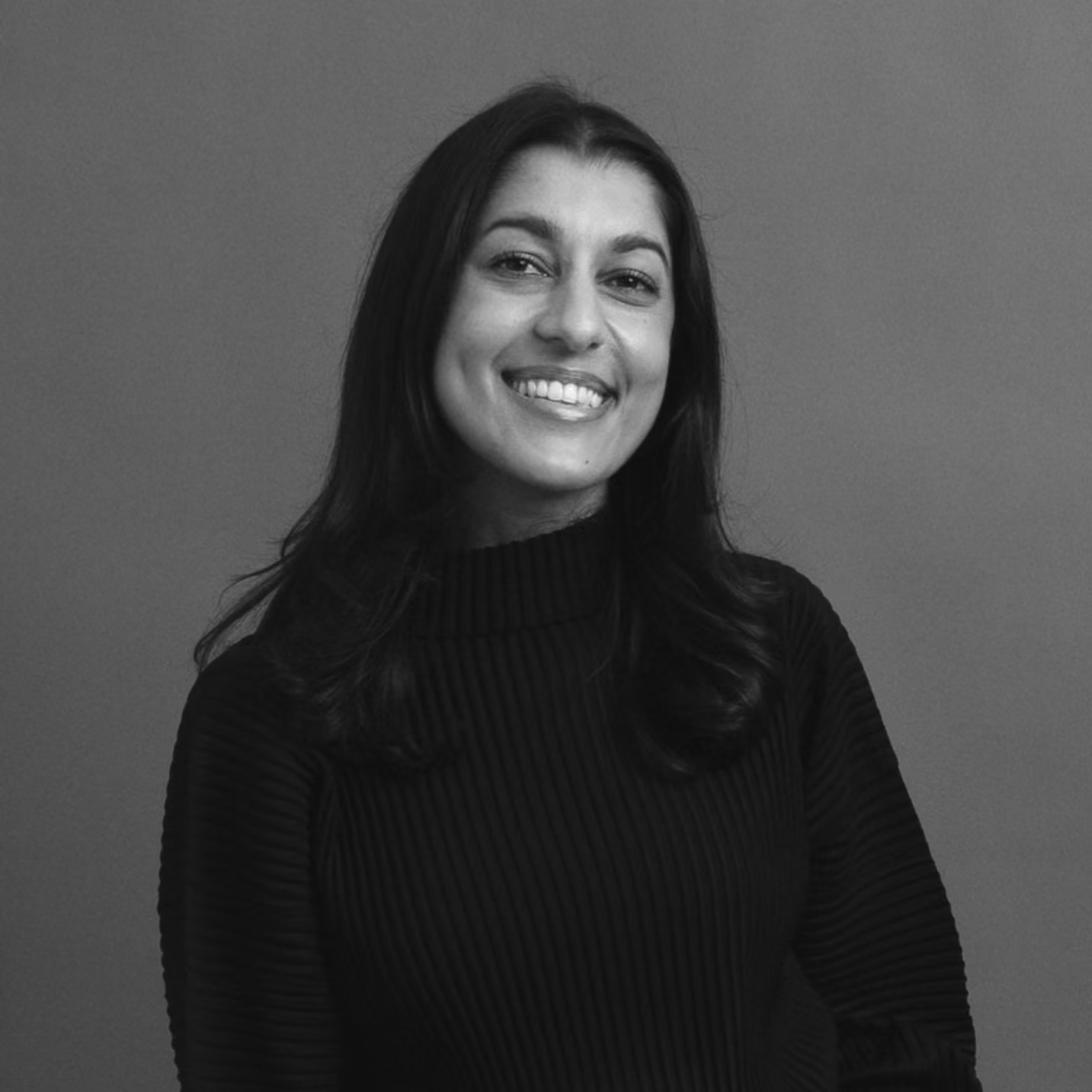
That was the focus of a recent conversation between Nan Ransohoff of Stripe and Sonia Nigam, CEO of Change, about Nan’s essay, The Third Wave of American Philanthropy.
Nan’s thesis is that the wealth being created through AI could eventually fuel another major era of American giving, following the philanthropy of the industrial age and the internet era. But the conversation went well beyond how much money could be available. The more interesting question is what this generation of donors might choose to do with it.
Nan describes American philanthropy as having gone through several periods shaped by major waves of wealth creation.
The industrial era produced philanthropists like Carnegie and Rockefeller, whose giving helped build universities, libraries, foundations, and other institutions that still exist today. Decades later, the rise of the internet created another generation of founders and investors with significant capital to give away.
AI may be creating the conditions for a third wave.
Exactly how large that wave becomes is still uncertain. It depends on how much wealth is ultimately created, when that wealth becomes liquid, and how much of it founders and employees decide to give away.
But Nan’s argument is that it is worth thinking about those questions now, before the money arrives at scale.
One of the most interesting parts of the conversation was Nan’s description of the mindset she sees among people building and investing in AI.
Many believe AI could reshape society within their lifetimes. They are used to operating quickly. And they often think about talent, rather than capital alone, as one of the biggest constraints on what can get accomplished.
Those instincts could carry over into philanthropy.
Rather than simply writing checks to established organizations, some donors may want to build new institutions, recruit exceptional people to work on difficult problems, fund experiments, and move much faster than traditional philanthropy historically has.
That does not necessarily mean every part of the Silicon Valley playbook translates neatly to giving. Nonprofits operate in a different environment than startups, and some of the hardest social problems cannot be solved on a venture-backed timeline.
But it could produce a philanthropic culture that is more willing to experiment with new models for deploying capital and measuring progress.
If AI does create a large pool of new philanthropic wealth, an obvious question follows: will there be enough effective places to put it?
Nan argues that this may become one of the central challenges of the third wave.
The bottleneck could increasingly be people, organizations, and ideas capable of absorbing significantly more funding and turning it into real-world results.
That means philanthropy may need more than donors. It may need stronger institutions, better infrastructure, talented operators, and new organizations built specifically around problems that remain underserved.
It also raises an interesting question for nonprofits: what would it take to be ready for a world where substantially more capital is available?
A larger philanthropic ecosystem also creates operational challenges.
More donors, more organizations, and more ways of moving money mean more complexity behind the scenes. Donations still need to reach the right nonprofits. Organizations need to be verified. Funds need to be tracked and distributed. Companies and platforms need systems that allow giving programs to scale without adding the same amount of operational work.
That infrastructure is less visible than the philanthropy itself, but it matters if giving is going to grow significantly.
At Change, we think a lot about this layer of the ecosystem: how technology can make it easier for companies and platforms to support nonprofits, move charitable funds, and build giving into products people already use.
No one knows yet how much philanthropic capital the AI era will ultimately create or how this generation of donors will choose to deploy it.
That uncertainty is part of what makes the conversation interesting.
The institutions, funding models, and norms that define the next era of philanthropy do not fully exist yet. The people creating them now have an opportunity to think carefully about what should be carried forward from previous generations of giving and what might need to change.
Watch the full conversation with Nan Ransohoff and Sonia Nigam above, and read Nan’s original essay, The Third Wave of American Philanthropy, for more on her thesis.


.png)
