
A charitable sales promotion is generally a campaign in which a company tells customers that buying or using its product or service will benefit a charity. When the charitable benefit is tied to a commercial transaction, the company may be acting as a commercial co-venturer (CCV) and become subject to state requirements around agreements, registration, disclosures, recordkeeping, and reporting.
For brands running cause marketing campaigns in 2026, that means compliance should be part of campaign planning from the beginning. A percentage-of-sales promotion, a fixed donation per product sold, or a limited-edition collection benefiting a nonprofit can all trigger commercial co-venture laws depending on the states involved and how the promotion is structured.
A charitable sales promotion connects the purchase or use of a company’s goods or services with a charitable benefit.
Ohio law, for example, defines a commercial co-venturer as a for-profit business that is primarily engaged in ordinary trade or commerce and conducts a charitable sales promotion. Its law separately regulates how those promotions are advertised and accounted for.
California uses a similar concept. According to the California Attorney General’s commercial coventurer guidance, a commercial coventurer is generally a business that is not primarily a fundraiser but represents that the purchase or use of its goods or services will benefit a charity.
Common examples include:
These sales percentage donations and fixed-dollar purchase-linked promotions are some of the clearest examples of campaigns that should receive CCV review.
A charitable sales promotion is different from a company simply making a corporate gift. If a business gives $50,000 to a nonprofit without tying that contribution to customer purchases, the classic CCV structure may not apply.
It is also different from a customer-funded checkout donation or round-up, where the customer contributes additional money. Those programs can raise separate issues under charitable solicitation regulations or fundraising platform laws depending on their structure.
A campaign generally warrants commercial co-venture analysis when a company publicly represents that buying or using its goods or services will generate a charitable benefit.
The donation does not have to be expressed as a percentage. A campaign can use a fixed amount per sale, a percentage of gross or net sales, all or part of “proceeds,” or another formula tied to commercial activity.
The important questions are:
For example, “10% of every purchase supports Charity X” is a classic purchase-linked charitable promotion. So is “$3 from every pack sold will be donated.”
A fixed corporate commitment can be less clear. If a company promises to donate $10,000 regardless of how many products are sold, purchases may not determine the donation amount. But some state definitions are broad enough that a sale advertised in connection with a charitable purpose can still warrant review.
That is why cause marketing compliance should focus on the actual campaign structure rather than the name the marketing team gives it.
There is no single nationwide CCV registration. Requirements are primarily state-based and can include written agreements, charity consent, registration, surety bonds, pre-campaign filings, advertising disclosures, accounting, and post-campaign reports.
California, Massachusetts, Hawaii, and Ohio illustrate how different those requirements can be.
In California, commercial coventurers generally must register and report unless they satisfy an exemption under state law. The California Attorney General states that nonexempt CCVs must register before working with a charity, renew annually, and file annual financial reports.
Massachusetts goes further. Under the Massachusetts Attorney General’s commercial co-venturer requirements, a CCV generally must register, post a $25,000 bond, pay a filing fee, and file each fundraising contract before co-venturing activity begins.
Hawaii requires written charity consent before a charitable sales promotion using the charity’s name begins in the state. The consent must be filed at least 10 days before the promotion and must address details such as the goods or services offered, campaign dates and geography, and how the charitable benefit will be represented. Hawaii’s statute was updated effective July 1, 2026, to also address charitable fundraising platforms and platform charities. Read Hawaii Revised Statutes § 467B-5.5 for more details.
Ohio provides a useful example of specific charity donation disclosures. If the actual dollar amount or percentage per unit benefiting charity has been determined, the commercial co-venturer must disclose it in each advertisement for the promotion. If it cannot reasonably be determined beforehand, Ohio requires a reasonable estimate instead. The state also requires written charity consent before the campaign and a final accounting afterward. Read Ohio’s charitable sales promotion requirements for more details.
The practical takeaway for a national brand is that the same campaign may create different obligations in different states. Agreements, filings, disclosures, and campaign timing should therefore be reviewed before the promotion goes live. Check out our interactive map of CCV requirements by state.
Charitable sales promotions can take many forms, from limited-edition products to restaurant giveback days. These recent campaigns show how purchase-linked giving appears in the market.
Aritzia’s limited-edition Juilliard collection states that proceeds up to $50,000 will be donated to Juilliard to support the next generation of artists. Aritzia also defines “proceeds” for the campaign as the retail selling price less variable costs.

This is the type of promotion that warrants CCV analysis because the charitable benefit is directly incorporated into the marketing of a product collection. It also shows why terms such as “proceeds” should be defined rather than left open to interpretation.
Give Like Dolly Day in September 2026 brought together several businesses using different charitable sales promotion models.
Jeni’s Splendid Ice Creams pledged 25% of in-person scoop shop sales during a three-hour window to the Dollywood Foundation. American Eagle tied sales proceeds from a special Dolly Parton T-shirt to the foundation’s book-gifting programs, while the Grand Ole Opry directed $5 from certain ticket sales to Dolly Parton’s Imagination Library.

These campaigns show that a charitable sales promotion does not have to run for weeks or months. Even a one-day or time-limited campaign – especially during a moment of heightened public interest or crisis – can create CCV obligations when a purchase is advertised as benefiting charity.
Minted provides participating nonprofits with unique promotional codes. Customers receive a discount, and Minted says it donates 10% of net sales from eligible orders using the code back to the organization.

This is a clear ongoing purchase-linked model: qualifying customer transactions determine the amount the nonprofit receives.
It also demonstrates the importance of defining the calculation. Minted specifies that the contribution is based on net sales and identifies purchases that do not qualify.
Earth Breeze’s Peonies of Hope campaign used a simple fixed-dollar mechanic: $3 from every limited-edition pack sold went to National Breast Cancer Foundation.
The 2025 campaign raised $87,180, and Change supported Earth Breeze with multi-state CCV filings, registrations, documentation, and reporting.

The structure makes the charitable promise especially easy for customers to understand: every qualifying purchase generates a specific charitable amount.
You can read more in the Earth Breeze customer story.
Williams Sonoma’s 2026 Tools for Change spatula collection states that, while supplies last, 30% of the sale of each participating spatula benefits Share Our Strength’s No Kid Hungry campaign.

That is a classic percentage-of-sales structure. The promotion identifies the charitable beneficiary, ties the donation to a particular product, and provides a specific percentage rather than simply saying that “a portion of proceeds” will be donated.
Sephora’s limited-edition Healthy Hair & Scalp Kit states that $25 of the purchase price of each kit is donated to Tides Foundation for recommended distribution to Memorial Sloan Kettering Cancer Center for breast cancer immunotherapy research. The promotion also includes a minimum donation of $350,000.
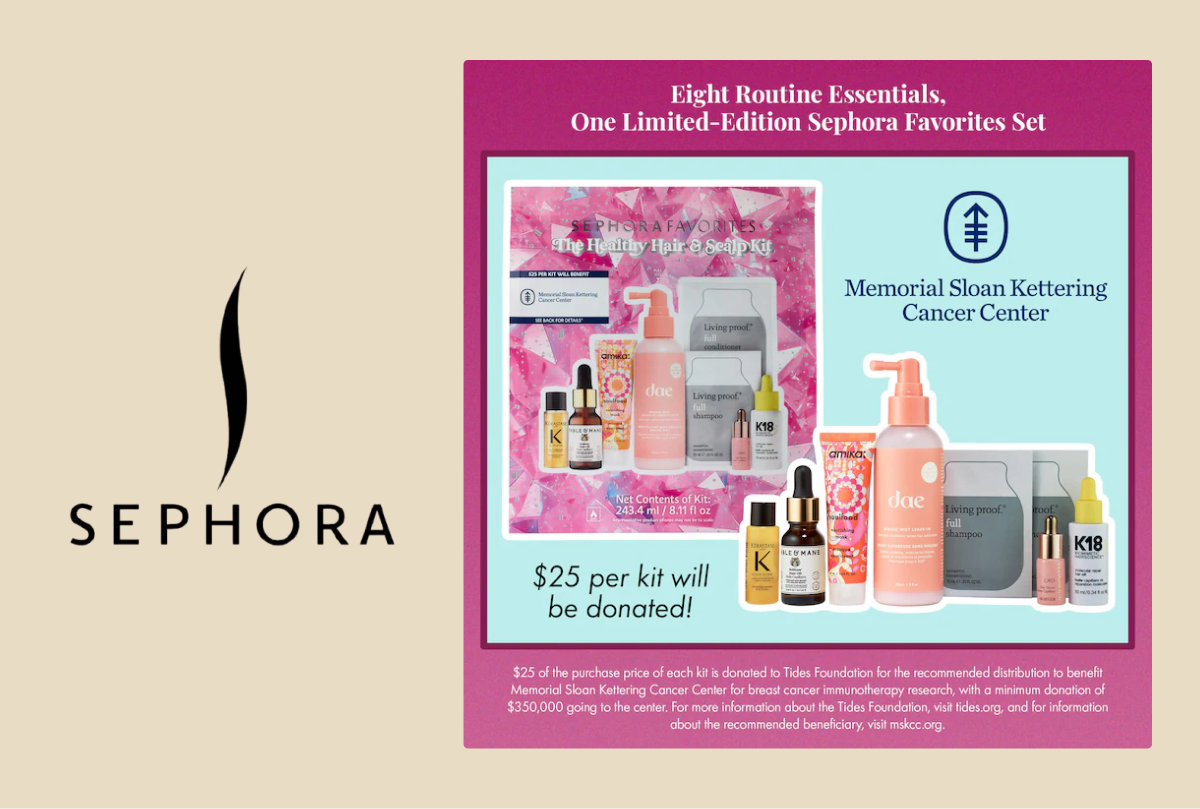
This is a strong example of a specific charitable disclosure. The customer can see the amount generated by each purchase, the charitable recipient structure, the intended charitable purpose, and the minimum commitment.
Parks Project and Dr. Seuss paired a Lorax collection with a $10,000 donation to Glacier National Park Conservancy to support the park’s Native Plant Nursery.
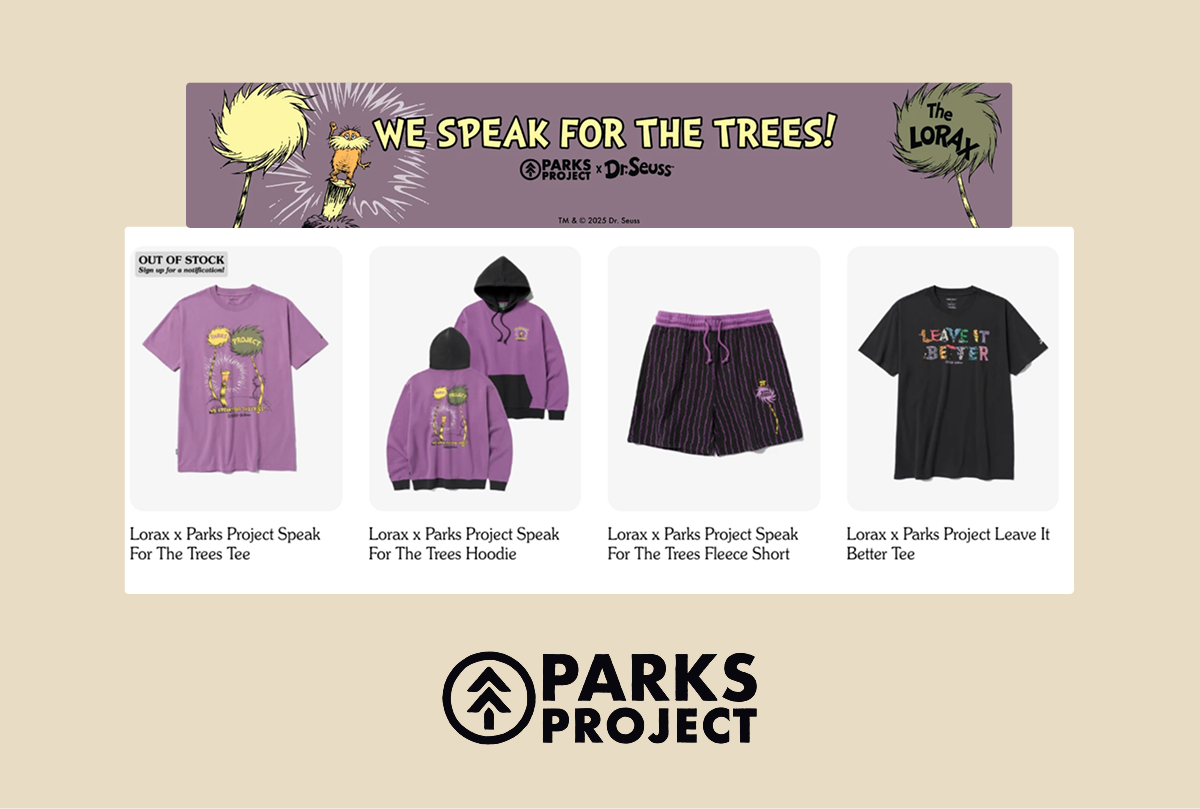
This is a useful boundary case. The campaign page describes a fixed charitable commitment rather than saying that each purchase generates a particular donation.
That distinction can affect the legal analysis. Brands should not assume that a fixed donation automatically falls outside CCV laws, particularly where the donation and product promotion are marketed together.
Companies should determine the CCV structure before finalizing creative, because the nonprofit agreement, filings, financial tracking, and public promise all need to describe the same campaign.
Before launch:
For brands operating in multiple states, this process can quickly become more involved than the customer-facing campaign suggests.
Change’s commercial co-venture compliance lifecycle guide explains why compliance continues from campaign planning through reporting and closeout.
The goal is not to make the charitable message more complicated. It is to make sure the legal and operational structure supports the simple promise customers actually see.
A company-funded promotion that publicly promises a percentage of qualifying sales to charity is a classic commercial co-venture structure and should be reviewed under applicable state law. The exact obligations depend on the states involved and the facts of the campaign.
It can. A promise such as “$5 from every purchase benefits Charity X” ties the charitable amount directly to a commercial transaction, even though the donation is expressed as a dollar amount rather than a percentage.
Not necessarily. In a round-up, the customer generally contributes additional money rather than the seller funding a donation based on the purchase itself. That can create a different analysis under charitable solicitation, fundraising platform, receipting, and funds-flow rules.
Depending on the states involved, the campaign may need to disclose the nonprofit, dollar amount or percentage benefiting charity, qualifying goods or services, campaign dates, and material limits such as a minimum or maximum. The public language should match the agreement and the way the donation is actually calculated.
Before the campaign launches, and ideally before the donation formula and creative are final. Some jurisdictions require agreements, registrations, consent, bonds, or filings before charitable sales promotion activity begins.
Change helps companies manage the state filings, agreements, campaign reporting, and other compliance work behind commercial co-ventures.